Hood Warfare 2 Chain Snatch adds a collection task after combat. Enemies drop chains, and picking those chains up earns points. You can also collect your teammates' chains before the opposing gang reaches them.
A kill and a pickup are separate parts of the objective. Exact point values, chain lifetimes, score limits, and pickup controls are not established here, so this guide focuses on the confirmed scoring task and decisions it creates.
Finish the job after a kill
The scoring opportunity is the enemy chain left after the kill. If you immediately move on to another fight, that chain may remain available for someone else to collect or recover.
Look for the dropped objective near the fight before choosing the next action. Confirm that you are moving toward an enemy chain rather than assuming every pickup benefits your score in the same way.
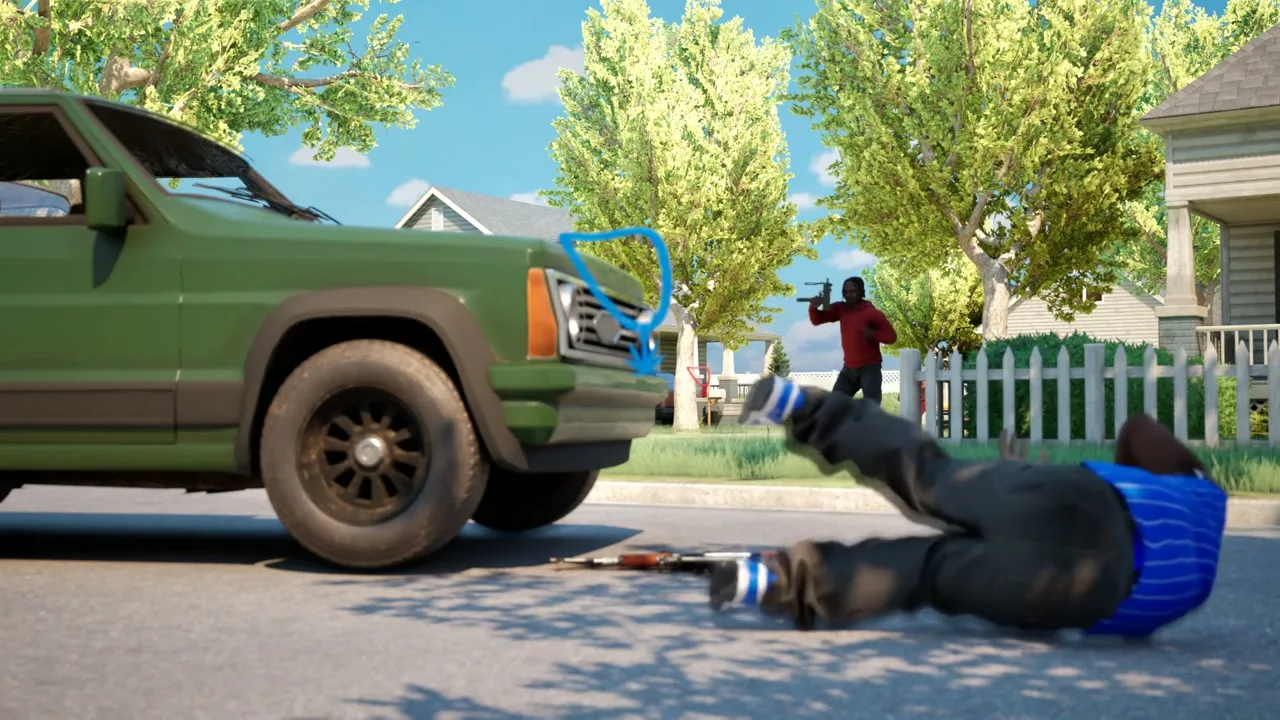
Look for the chain-shaped marker after an encounter. This view helps identify the pickup, without showing a completed collection.
The confirmed mechanic is collecting dropped chains. It does not establish a requirement to carry them to a home base, deposit them at a station, or protect an inventory of held chains.
Enemy and teammate chains have different jobs
| Chain you collect | Confirmed purpose |
|---|---|
| An enemy's dropped chain | Earn points for the pickup |
| A teammate's dropped chain | Recover it before the other gang can collect it |
Do not assume a recovered teammate chain awards the same points as an enemy chain. The established benefit is denying the opposing gang access to that dropped chain.
This makes friendly losses relevant to the next decision. A teammate's death creates something your gang can recover, rather than only a reason to hunt the opponent who won the fight.
Judge the pickup before committing
The following advice follows the objective rather than a tested route: consider the area around the dropped chain before running directly toward it. If opponents still control that area, collecting it may expose you to another fight.
When playing with teammates, consider having one player watch the approach while another collects an accessible chain. After a friendly loss, tell the team where the recovery opportunity is. These are coordination choices, not fixed roles required by the mode.
If reaching a chain would pull everyone away from other nearby chains or expose the entire team, reassess the pickup. The rules here do not provide a numerical formula for trading deaths against points.
Avoid treating chains as a bag objective
Chain Snatch and Hit A Lick both ask you to do more than shoot, but their tasks differ. Chain Snatch describes collecting what enemies drop. Hit A Lick describes taking an enemy bag back to your side.
Do not add a return route or a deposit step to Chain Snatch without confirmation in the match. Likewise, do not assume chains expire after a set time or that dying directly removes previously earned points.
For a focused learning session, watch what happens after each encounter: where a chain appears, whether your team can reach it, and whether a teammate chain needs recovering. Keep the attention on turning combat into the actual pickup objective.